A radar coverage gap in the heart of the Mississippi Delta region is now filled thanks to a new radar installation by Climavision, a climate-tech data pioneer.
The new radar in Clarksdale, 75 miles southwest of Memphis, fills a critical low-level radar void in Northwest Mississippi, and adds to the company's advanced gap-filling radar network across the United States.
Since the 1990s, the National Weather Service has monitored severe weather in the Mississippi Delta using NEXRAD S-band radars located near major urban centers like Memphis and Jackson. However, low-level coverage voids can exist between these systems as the radar beam moves higher in the atmosphere the further it gets from the radar location. This leaves some areas, including Clarksdale and large swaths of Mississippi, Tennessee and Arkansas, exposed to weather phenomena that often happen
in the lower atmosphere such as flash flooding, sleet, ice and tornadoes.
The unique geography of the Mississippi Delta, with its flat, low-lying terrain and relative proximity to the Gulf of Mexico, allows for the easy mixing of contrasting air masses. When warm, moist air rises and meets cooler, denser air, it can create conditions favorable for thunderstorms and severe weather.
That’s why Louisville, Kentucky-based Climavision has installed a new radar in Clarksdale. Climavision’s dual polarization, X-Band weather radar is designed specifically to fill these voids to provide the highest resolution view of what’s happening nearest to the ground.
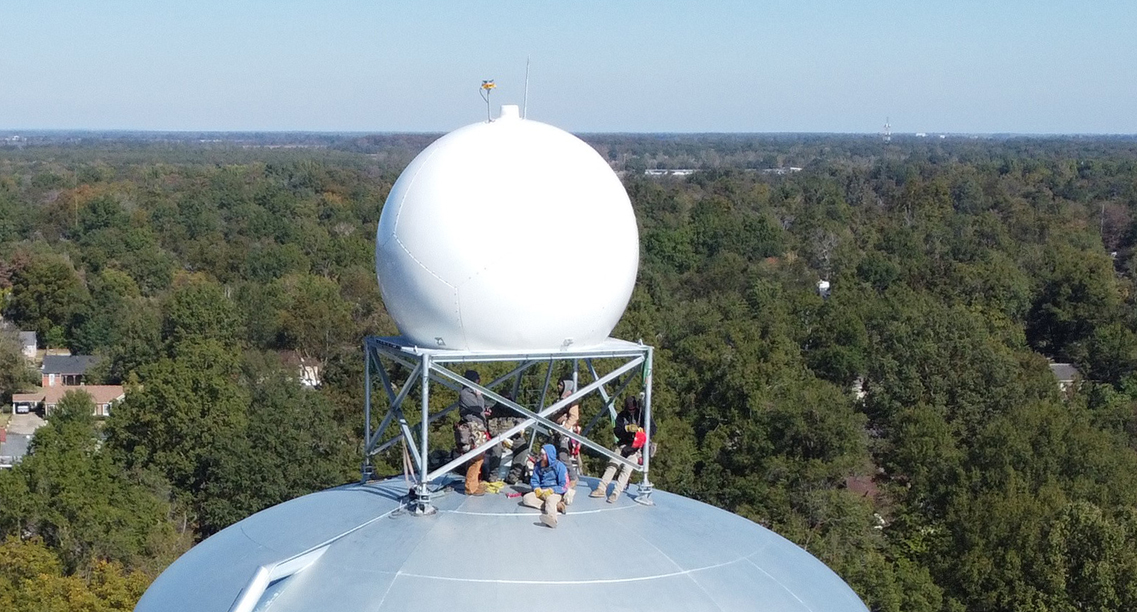 Climavision's new dual polarization, X-Band weather radar dome sits atop a Clarksdale water tower. (Photo by Climavision)
That insight helps commercial forecasters and emergency officials better plan, prepare, and respond to volatile weather situations. And thanks to a new contract with NOAA, the National Weather Service can now access data from Climavision’s previously installed sites, providing them with decision support as they issue watches, warnings and other emergency information.
“Climavision’s new radar in the Mississippi Delta brings clarity to what’s happening in the atmosphere above these communities,” said Chris Goode, co-founder and CEO of Climavision. “The new technology will allow forecasters and emergency managers to track potentially life-threatening storms before they hit, bringing a new level of awareness to the people who live in the region.”
While all warnings and notices will continue to come through official National Weather Service channels, the system will provide critical visibility enabling commercial forecasters and emergency officials to better plan, prepare, and respond to volatile weather situations.
The company is already at work addressing other low-level gaps in Mississippi and hopes to have five online in the state next year. Nationally, Climavision plans to have 30 radars online by year end, eventually scaling the network to more than 200 radar systems.