Charleston Recovery Center reopened this week with new executive directors, a new program director and a renewed focus on the faith-based program’s mission of pointing people to God and, through Him, to a new life.
The all-male residential treatment and recovery center offers a “Christian discipleship training program for people with drug, alcohol or emotional issues.” It is operated under an agreement with City on a Hill Ministries, a Tallahatchie County-based nonprofit governed by a local board of directors.
Board President Eddie Hargett, of Charleston, said that from the center’s initial opening in April 2024, it has functioned with the conviction that the most life-altering addiction and mental health treatment programs involve “God changing a person’s heart and changing their mind.”
“That’s what we’re all about here,” he noted. “We’re not about running a typical secular mental health program. Some of those are good, but the real success is changing a person’s heart.”
Sharing the same Christian philosophy are the center’s new co-executive directors, Chris Gray and Sherry Jones-Gray, and new program director Nason Johnson, who were introduced during a gathering at the center late last week.
All three of the new recovery center workers have endured personal encounters with addiction, and have experienced the saving grace of Jesus Christ.
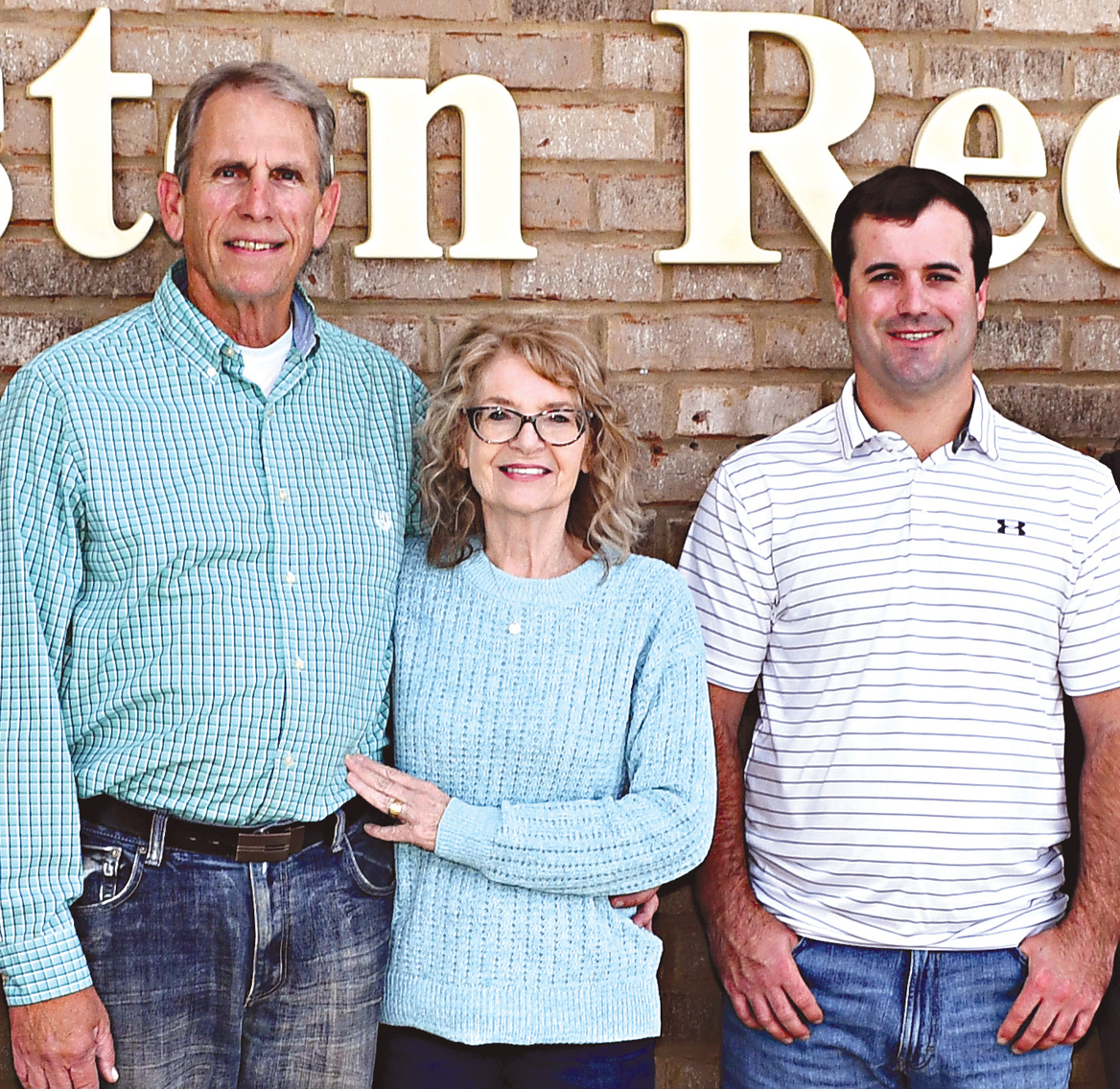 From left are pictured Charleston Recovery Center's new co-executive directors, Chris Gray and Sherry Jones-Gray, and new program director Nason Johnson. (Photo by Clay McFerrin, Copyright 2025, Emmerich Newspapers Inc.)
Sherry, a native of Charleston whose family home, ironically, stands alongside the present-day Charleston Recovery Center, attended — she said "grew up in" — the Charleston First Baptist Church.
Although she attended church from a young age, and was saved at the age of 13, Sherry said she did not experience a life-changing "radical salvation" until she was 41 years old.
“I knew about Jesus and I could tell you any story [from the Bible], but I did not know Jesus," she explained. "In 1995, He met me in my living room.”
She said her focus now is on trying to help “pull somebody out of the pits of hell and making sure they know their final destination."
"That’s the biggest thing for me. It’s about souls, souls, souls, souls, souls,” Sherry repeated for emphasis.
She also has a passion for helping to change lives impacted by addiction.
Sherry suffered the cruel loss of her youngest son, Nathan Shackelford, to drug abuse when he was 36 years old.
“He was a drug addict, and he overdosed Christmas Day 2020,” she said. “This is why I do this.”
Now 72, Sherry has ministered to women housed at the Grenada County Jail and has taught at God’s House of Hope in Kilmichael, which operates recovery centers for both men and women.
“I’m really excited that this is a men’s program,” she noted of the Charleston center. “Maybe I can help a young man change his life.”
— * —
Chris Gray, 65, entered drug rehab at the age of 40 and for the majority of his life since has been involved with programs that help others deal with their own addictions.
“I graduated from Teen Challenge in 2000. Teen Challenge is the oldest, longest-running drug rehab in the world,” Chris noted. “It is a 12-month Christian faith-based program.”
After completing the course himself, he stayed on staff there for a while.
Chris also has worked with Celebrate Recovery, another Christian 12-step program.
“My wife and I started several of those programs in Mississippi through the years,” he said. “We will bring that program in here.”
Chris firmly believes that residents of any recovery program should remain in the course for one year.
"I went into the program at 40 years old, and that staff had 12 months to change 40 years of messed-up thinking," he noted. "So, it does take time. ... I could run guys through here, but I don't care about running numbers. I just want one changed life at a time."
Chris admits that a full year of participation in a drug program can seem daunting for a young guy.
"You get a guy in here who's 17 or 18 years old and throw a year at him, it kinda scares him," he said. "But, man, I get excited because he's got a chance to change his whole life. He won't have to wait until he's 40 to do this if he can get his life straightened out now."
Like Sherry, Chris said he grew up attending church but made no commitment until much later in life: “I didn’t bend my knee until I was 40.”
Now worship leader of a church in Kilmichael, where he and Sherry still live, Chris said he taught at God’s House of Hope there for three-and-a-half years, where he met students and staff from Charleston Recovery Center, including Nason.
— * —
Nason Johnson, 34, a former student resident of the Charleston center, has returned as its new resident program director and will oversee day-to-day management and operations.
“I will be here all the time,” he explained.
Nason entered the Charleston center in October 2024 and graduated in April.
Since then, he said he has been involved with ministry at the Grenada County Jail.
“All this year, I’ve been ministering to the men on Sunday nights,” Nason noted.
He sees his new position in Charleston as an opportunity.
“I know God has called me to be able to come back and to extend the same kind of help that I was given,” Nason said. “I’ve got this fire inside of me; I want to help souls.”
While he said the multimodal substance abuse treatment approach in Charleston is great, Nason emphasized that the regimented course is not what produces lasting change in a person’s life.
“The program ain’t what does it. It’s God who does it,” he said. “The program is just going to be the tool that He uses to get it done.”
— * —
Charleston Recovery Center, at 30104 Mississippi Highway 32, had been closed for a short time after operator God’s House of Hope pulled out effective Oct. 31.
“It was just a difference in some philosophy,” City on a Hill Ministries board member Ken Gregory said of the exodus. “We wanted to concentrate more on the people of this area, whereas God’s House of Hope, a great organization, is spread out in different areas.”
Hargett said the story behind the arrival of Chris, Sherry and Nason “was a God thing.”
“Really, it was a God-directed thing that He made them available,” Hargett noted. “I think what’s going on here is right in the center of God’s will.”
— * —
Hargett said no fee is assessed those attending Charleston Recovery Center, but there is one initial cost that might have to be borne by the applicant seeking entry.
“They would need to get a blood test coming in to be sure that they’re free of any kind of contagious disease, and they will be responsible for that. That’s the only cost,” Hargett said. “We’re going to try to work with the Health Department to get those done free, and I think most of those will be done free.”
Gregory said Charleston Recovery Center is “totally financed by donations.”
“We don’t receive any government money at all,” he noted. “Therefore, we don’t have to answer to any government entity.”
Gregory said the community has been “very, very helpful” in the past to support the center financially. Numerous churches, some businesses and others have sent donations from time to time.
“If they could continue to support the ministry here, we would certainly appreciate it,” Gregory noted.
Hargett agreed, saying, "We've sent out letters to some 40 churches in the community advising them of the changes here and what's taken place. We've heard from many of those and, of course, everybody is still on board with their help."
The private Lawrence Davis Trust, for which Ken Gregory's wife Patti is a trustee, and the Jennifer Hargett Foundation also have been major contributors to the center.
— * —
Residents of Charleston Recovery Center must be at least 18 years old and male.
To learn more about the center, call 662-783-6264 or visit the website, www.charlestonrecovery.org.